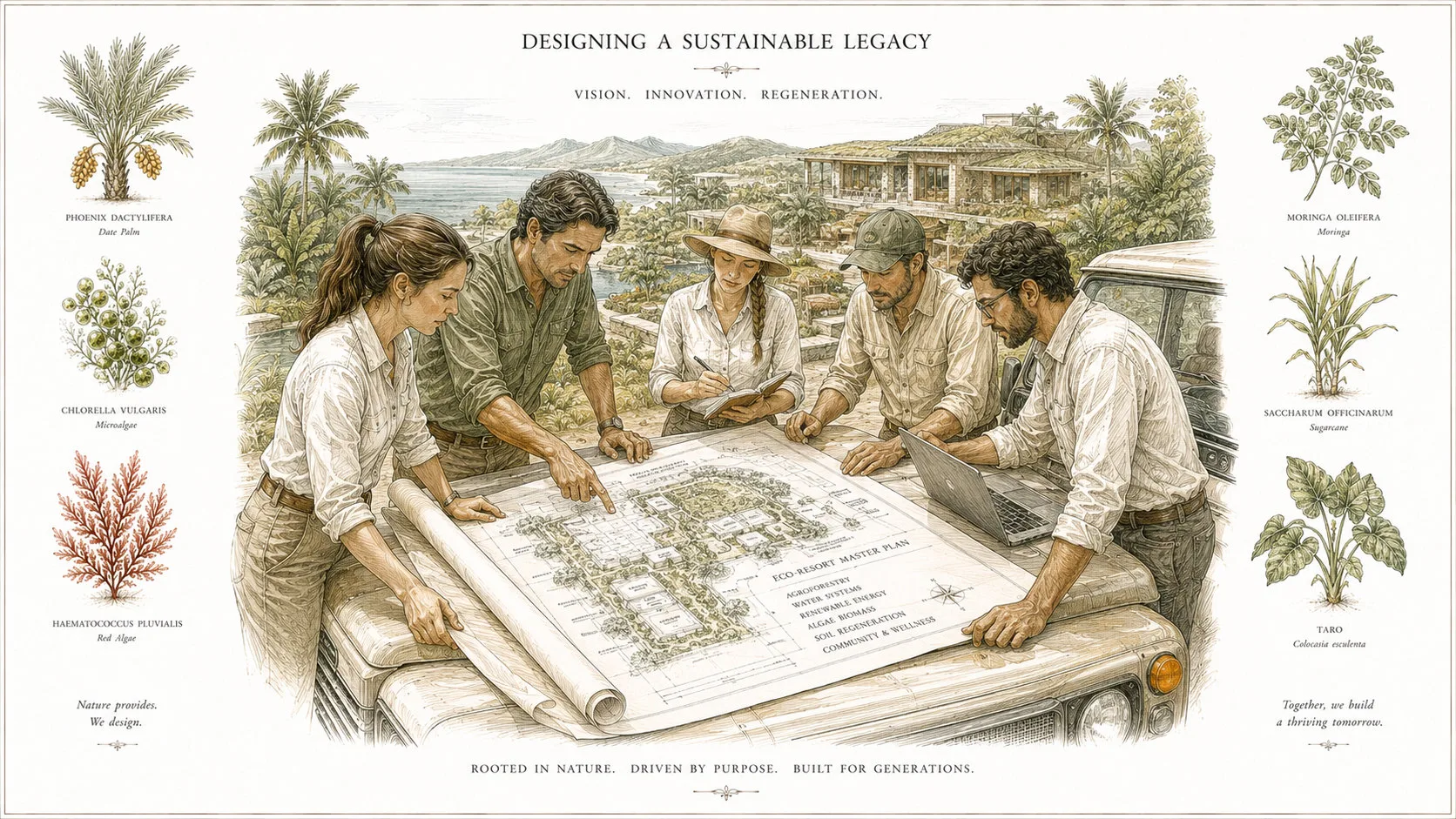
Vertical Green Farming's advisory practice works with developers, governments, resort operators, and agricultural enterprises to design, plan, and implement integrated food systems that work — technically, economically, and ecologically.
We don't start with our products. We start with your site, your constraints, your goals, and your market. Then we design the system that serves them — bringing in our technology stack only where it delivers a clear, documented advantage.
Some food system decisions are straightforward — buy a system, install it, grow. Others are not.
When you are designing the agricultural infrastructure for a luxury eco-resort that must achieve GSTC certification, supply Michelin-caliber kitchens year-round, and generate measurable ESG documentation for investors — the stakes are different. When you are building a food security strategy for a regional development that will house hundreds of thousands of people — the complexity is different. When you are restoring a degraded agricultural landscape that carries cultural heritage significance — the responsibility is different.
Vertical Green Farming's advisory practice exists for those decisions.
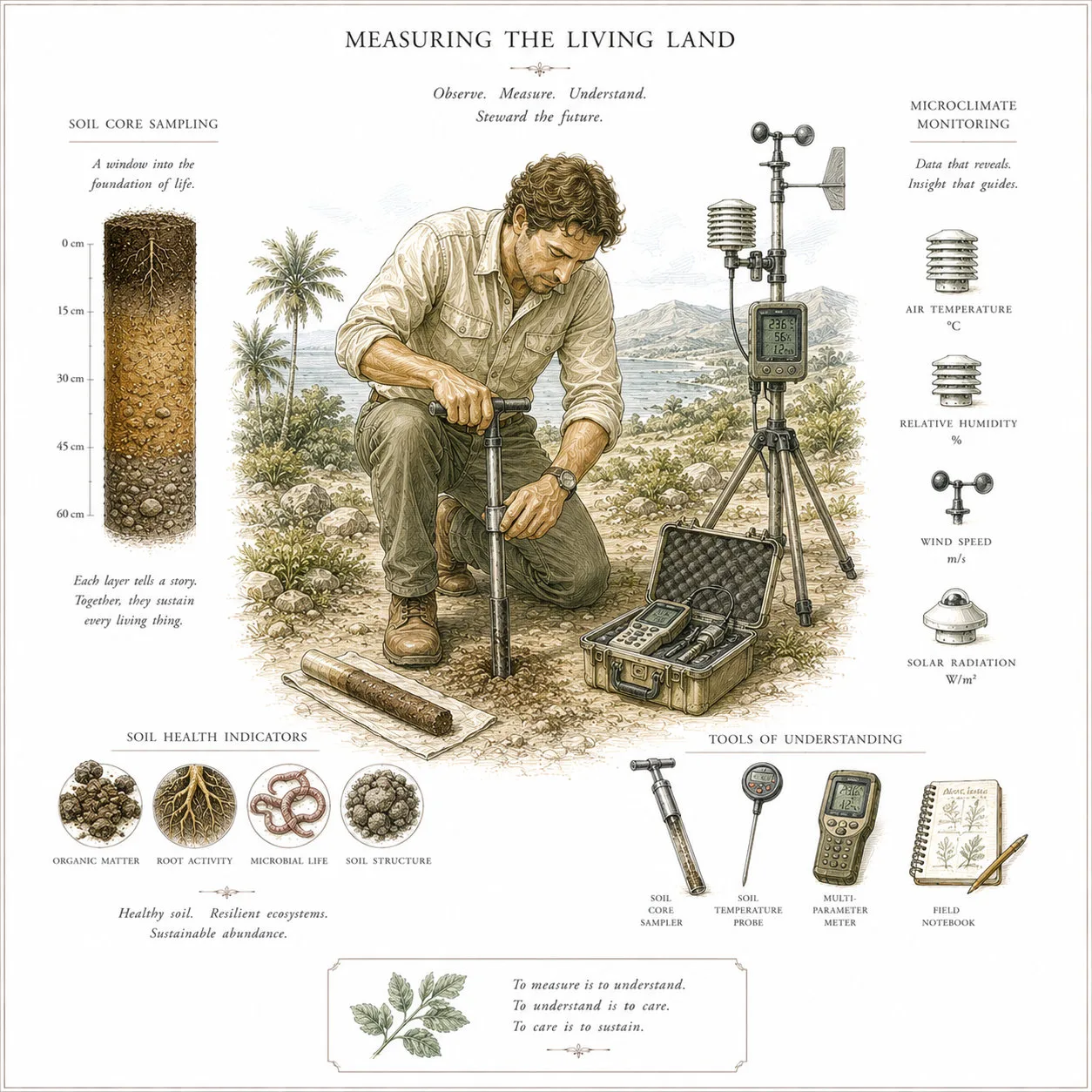
Every engagement begins with the ground truth. We conduct microclimate analysis, soil and water baseline studies, existing infrastructure review, and supply chain mapping — identifying constraints, opportunities, and the precise combination of systems that will perform in your specific conditions. We deliver a CAPEX/OPEX financial model with documented ROI projections before any system commitment is made.
Working alongside your architecture, landscape, and operations teams, we integrate outdoor farming, edible landscapes, controlled environment systems, heritage agronomic strategies, and precision technology into a coherent, closed-loop agricultural ecosystem. Every element is designed to function as part of a system — not as isolated installations.
We oversee installation, commission every system, and launch the first production cycles — so your kitchens, supply chains, or restoration programs have live output from day one. Simultaneously, we train your on-site teams and establish the data baseline for GSTC, ESG, and sustainability certification compliance.
Post-deployment, we remain engaged. CoFarmer AI provides continuous farm management monitoring. Our agronomy team delivers seasonal performance reviews, protocol refinements, and system optimizations. Your operation improves continuously — not just at launch.
Most consultants arrive with a predetermined solution. We arrive with questions.
What are the constraints of your site — climate, water, soil, labor? What are the non-negotiables of your operation — certification requirements, supply targets, guest experience standards? What is the cultural and heritage context of the land you are working with? What does success look like in five years?
Only when we understand those answers do we begin designing a system. And that system will integrate the full spectrum of available approaches — from ancestral polyculture and seed sovereignty programs to Bio-Mimetic CEA™ and AI-managed supply chain traceability — in whatever combination serves your specific situation.
Integrated farm-to-table food system design for luxury resorts, eco-lodges, and premium hospitality developments — achieving year-round culinary-grade produce supply, GSTC certification, and guest experience differentiation through living agriculture.
Food system master planning for mega-developments, smart cities, and sovereign food security programs — designing resilient, scalable, locally-sourced food infrastructure that reduces import dependency and builds long-term food sovereignty.
Preservation and scaling of traditional farming knowledge, heritage seed programs, and ancestral cultivation practices — integrating modern precision tools in ways that amplify rather than replace generational wisdom.
Agronomic master planning for large-scale land restoration programs — combining propagation infrastructure, soil remediation strategies, and reforestation protocols into coherent, measurable restoration plans.
Strategic advisory for existing farming operations restructuring toward premium market positioning — identifying the highest-value crop programs, system investments, and supply chain relationships that transform operational economics.
Technical advisory for impact investors and development finance institutions evaluating agricultural project viability — feasibility studies, operational due diligence, and post-investment monitoring frameworks.
The most important thing we bring to any advisory engagement is not methodology. It is credibility.
We are not management consultants who have studied agriculture. We are operators — people who design, install, and run the systems we recommend. When we specify a GreenShelter configuration, we are specifying something we operate ourselves. When we project a harvest yield, we are projecting against documented results from our own growing network.
That means our recommendations are grounded in real operational experience — including the failures, the unexpected variables, and the hard-won refinements that only come from actually growing food in difficult conditions.
Every advisory engagement begins with a complimentary discovery session — a focused conversation about your project, your constraints, and your goals. From that conversation, we develop a scoped proposal that defines the engagement clearly: what we will assess, what we will design, what we will deliver, and what it will cost.
We work on fixed-scope engagements — not open-ended retainers. Every phase has defined deliverables and documented outcomes.
4–8 weeks. Site analysis, baseline studies, CAPEX/OPEX modeling, and technology recommendation report.
8–16 weeks. Full system design, integration specifications, supplier and technology selection, and implementation roadmap.
3–6 months. Installation oversight, commissioning, staff training, and first-cycle production management.
Quarterly retainer. Seasonal reviews, protocol updates, certification support, and continuous optimization.
Tell us about your project — the scale, the location, the goals, and the constraints. We will tell you honestly what is possible, what it will take, and whether we are the right partner to help you build it.